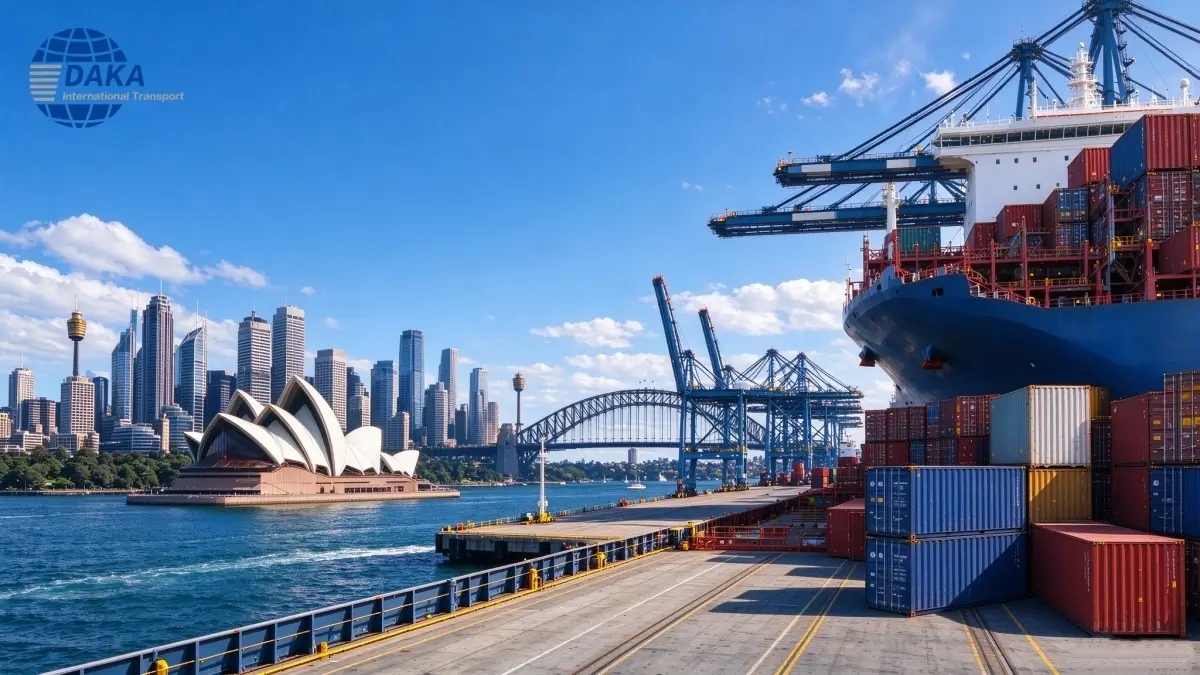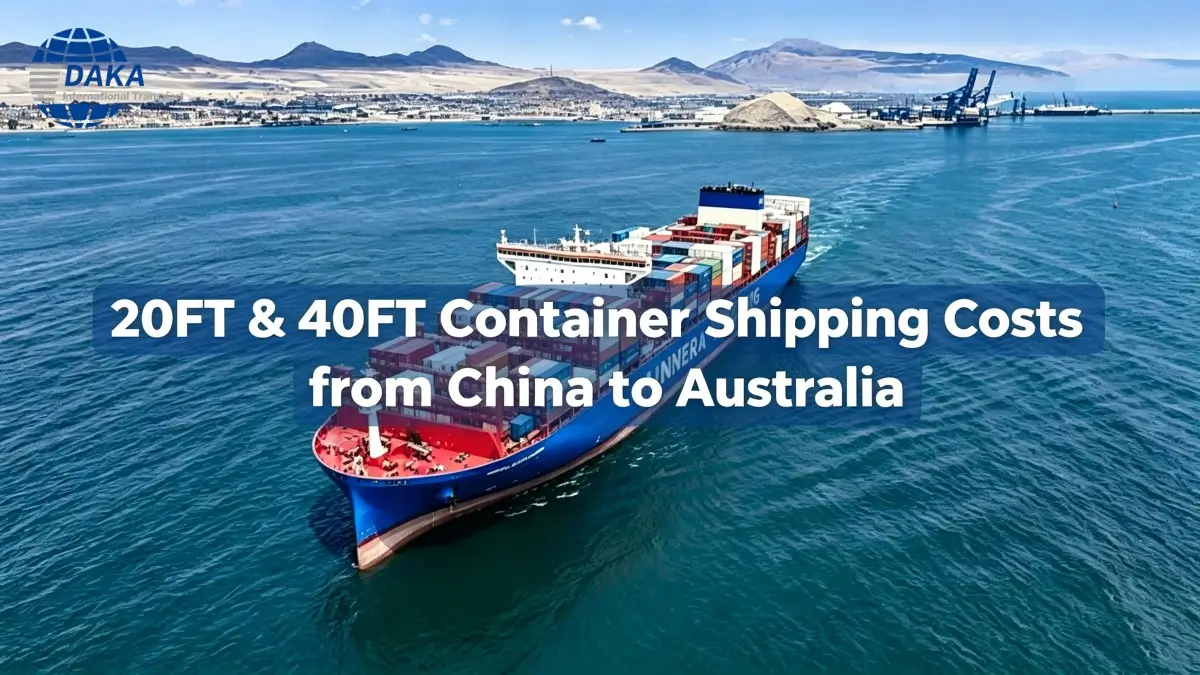
With the continuous development of global trade, sea freight has become the preferred method for transporting goods between China and Australia due to its cost efficiency. Compared with air freight, sea freight from China to Australia offers lower transportation costs, larger cargo capacity, and a variety of service options.
Whether for businesses or individuals, sea freight provides a reliable solution for shipping from China to Australia. However, sea freight involves multiple steps, including selecting the transportation method, operational processes, transit time, cost structure, customs clearance procedures, and practical considerations. Choosing the most suitable logistics solution is essential.
This article provides a comprehensive guide to help you understand sea shipping from China to Australia and successfully complete your shipment.

1. Why Choose Sea Freight from China to Australia?
Sea freight plays an important role in international logistics due to its unique advantages. Here are the main reasons to choose sea freight for shipping from China to Australia:
- Cost-effective: Compared to air freight, sea freight has a significantly lower cost per unit, making it ideal for bulk or heavy cargo.
- Suitable for various goods: Sea freight can handle different types of cargo, including bulk goods, containerized cargo, and oversized items.
- Environmentally friendly: Sea freight produces relatively lower carbon emissions, aligning with modern green logistics trends.
- Stable and reliable: Shipping routes are well-established, and schedules are stable, making it suitable for regular shipments.
Although sea freight is slower (typically taking 2–6 weeks), its affordability and flexibility make it the preferred choice for many businesses and individuals using shipping by sea from China to Australia.
2. Main Sea Freight Methods from China to Australia
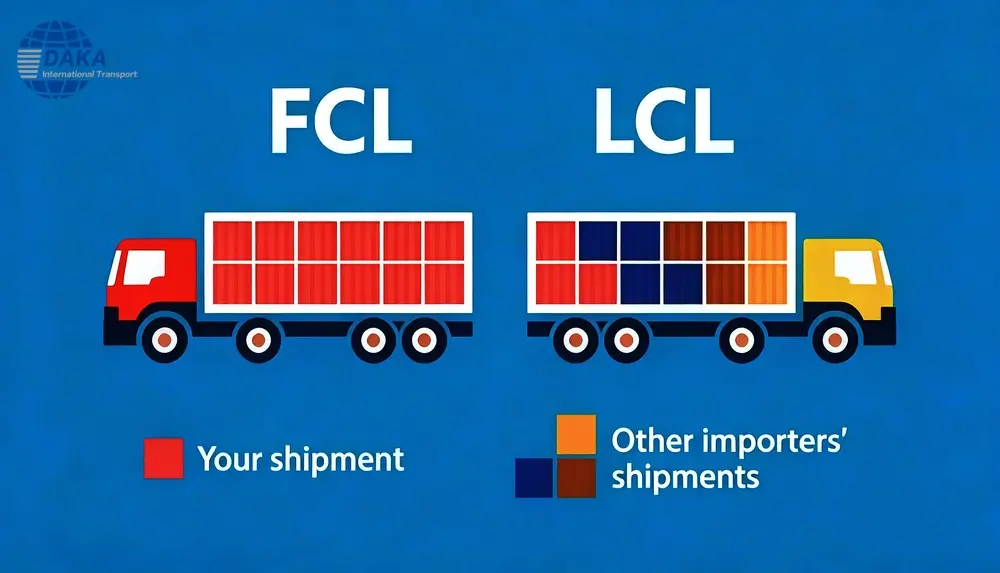
In international sea shipping from China to Australia, there are two main methods: Full Container Load (FCL) and Less than Container Load (LCL), suitable for different shipment volumes and customer needs.
1. Full Container Load (FCL)
If your cargo volume is large enough, you can use FCL shipping. The shipper or consignee exclusively uses the entire container, regardless of whether it is fully loaded or partially filled.
Advantages of FCL:
- Exclusive use of the container ensures higher security
- No mixing with other cargo, reducing the risk of damage or loss
- More efficient customs clearance and transportation
Common container types:
- 20GP
- 40GP
- 40HQ
- Special containers such as reefer containers, open-top containers, and flat rack containers
2. Less than Container Load (LCL)
When the shipment volume is too small to fill an entire container, LCL is a suitable option. Multiple shipments from different customers are consolidated into one container, usually arranged by a freight forwarder.
Advantages of LCL:
- Lower cost, suitable for SMEs and e-commerce businesses
- High flexibility with low minimum shipment requirements
- Available from multiple ports across China
3. Sea Freight Shipping Process Step-by-Step
To arrange a sea shipment from China to Australia, you first need to find a professional freight forwarder (such as DAKA), provide detailed cargo information, and obtain a quotation and shipping plan. The freight forwarder will choose the best solution (FCL or LCL) based on cargo type, quantity, and delivery time, and confirm the port of origin and destination according to the factory and delivery address.
FCL Shipping Process:
- Booking space: The freight forwarder collects cargo information and books container space with the vessel owner.
- Container loading: The empty container is picked up from the Chinese port and delivered to the factory for loading (or cargo is sent to the warehouse for loading). After loading, the container is transported back to the port.
- Chinese customs clearance: Prepare export documents and complete customs clearance.
- Loading on board: After customs release, the container is loaded onto the vessel.
- Australian customs clearance: Coordinate with the local team to prepare import documents and complete customs clearance.
- Inland delivery: After arrival, the container is delivered to the consignee’s address.
LCL Shipping Process:
- Cargo entry into warehouse: Goods from different customers are collected and stored in the warehouse.
- Chinese customs clearance: Each shipment is cleared separately.
- Container loading: Goods are consolidated and loaded into one container.
- Vessel departure: The container is loaded onto the vessel.
- Australian customs clearance: Prepare documents for each shipment.
- Container unpacking: The container is unpacked at the destination warehouse.
- Inland delivery: Goods are delivered separately to each consignee.
Below Video show how we ship by LCL
4. Sea Freight Time and Cost
Sea shipping time from China to Australia
The typical transit time for sea freight time China to Australia from major Chinese ports (such as Shenzhen, Ningbo, Shanghai, and Qingdao) to major Australian ports (such as Sydney, Melbourne, and Brisbane) is approximately 2–6 weeks.
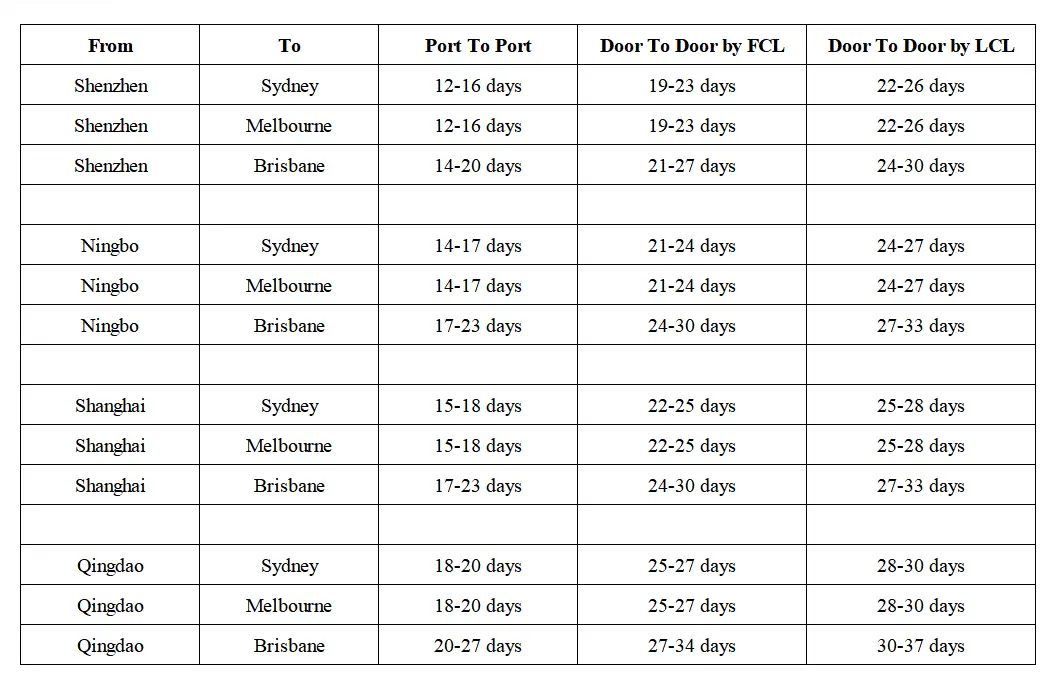
The above times are for reference only. The actual transit time depends on shipping schedules, weather conditions, and port congestion.
Tip: Choose a freight forwarder that provides real-time tracking services to monitor shipment status and better plan your inventory and customer expectations.
Sea Shipping Cost from China to Australia
The total cost of sea freight is not limited to ocean freight and usually includes:
- Pickup fees (inland transport from factory to port)
- Port handling charges
- Ocean freight
- Customs clearance fees
- Duties and taxes (such as GST in Australia)
- Insurance (optional but recommended for high-value cargo)
- Delivery charges (from destination port to final address)
Request a full quotation from the freight forwarder, ensure transparency with no hidden fees.
Factors affecting Sea shipping cost from China to Australia:
- Cargo volume and weight
- Shipping method (FCL or LCL)
- Additional surcharges (fuel, peak season)
- Distance between origin and destination
For example, the sea freight cost for a 40-foot container from China to Australia typically ranges from USD 1200 to USD 2500 (Jan–Apr 2026), depending on market conditions.
5. FCL vs LCL
When choosing FCL or LCL, consider the following:
| Category | LCL | FCL |
|---|---|---|
| Container Usage | Shared with multiple shippers | Exclusive use of one container |
| Cargo Volume | Suitable for shipments from 1 CBM (minimum chargeable volume). If cargo is under 1 CBM and <200 kg, air freight may also be considered. Typically best for shipments under 15 CBM. | Suitable for all shipment sizes. However, when cargo volume reaches 15 CBM or more, FCL is usually the better option.
Common container capacities: |
| Freight Cost | Charged by CBM or weight (ton). More cost-effective for shipments under 15 CBM. Costs may rise quickly beyond that. If volume is around 13–17 CBM, comparing FCL is recommended. | Fixed rate per container. Generally more cost-effective for shipments over 15 CBM. While per-CBM cost may not always be lower, fixed charges are spread across larger cargo volume, improving overall cost efficiency. |
| Transit Time | Usually a few days longer than FCL due to consolidation, sorting, and unpacking.
If one shipment is inspected, the entire container may be delayed. |
Faster, as cargo moves directly from origin to destination without deconsolidation. |
| Safety | Since the container is shared and involves multiple loading and unloading processes, the risk of damage, theft, or loss is higher. | As the container is used by a single consignee and remains sealed throughout the journey, the risk of damage, theft, or loss is lower. |
| Traceability | Trackable via Bill of Lading, but visibility may be limited after arrival or unpacking. Tracking can be less accurate due to multiple parties involved. | Similar tracking via Bill of Lading, but easier to monitor due to a single consignee and clearer shipping route. Forwarders usually provide estimated schedules. |
| Delivery Flexibility | More flexible, especially for small shipments, residential addresses, and remote areas | Less flexible in some cases. Delivery appointments (e.g., Amazon FBA) may take longer, and some residential or remote locations may not support FCL delivery |
| Booking During Chinese Holidays | Often easier to secure space, as carriers consolidate multiple shipments to maximize container usage | Higher demand may lead to container shortages before major holidays like Chinese New Year or Golden Week |
| Customs Clearance & Inspection | Same clearance process as FCL. However, if one shipment is selected for inspection, the entire container may be checked, increasing delay risk. Inspection costs are shared among all shippers. | Inspections are random and unavoidable. All related costs (storage, demurrage, etc.) are borne by the buyer and should be considered in advance |
| Suitable Cargo | Small to medium shipments (<15 CBM); low-risk, non-perishable goods | Large shipments (>15 CBM); heavy, fragile, high-value, or sensitive goods |
You can kindly check related article: How to choose between FCL and LCL?
6. Sea Shipping Documents Required from China to Australia
Documents required for sea freight from China to Australia include:
- Bill of Lading
- Packing List
- Commercial Invoice
- Packaging Certificate
- Certificate of Origin
- Special goods may require additional permits or quarantine certificates.
For customs clearance, you can use the brokerage services provided by the freight forwarder or hire a broker.
7. Practical Tips to Reduce Costs
- Choose the right shipping method based on cargo volume
- Consolidate shipments from multiple suppliers
- Book early to avoid peak season surcharges
- Work with an experienced freight forwarder
- Take advantage of the China-Australia Free Trade Agreement
Conclusion
Shipping goods from China to Australia by sea is a complex but manageable process involving multiple steps and professional procedures. Whether you are a business importer or an individual, proper preparation and working with a reliable logistics partner are key to success. Plan ahead, package carefully, declare accurately, and consider purchasing insurance to minimize risks. This article aims to provide practical insights to help you succeed in international logistics.
If you have any uncertainties, it is recommended to consult a professional freight forwarder like DAKA Transport. Their experience and expertise can help you avoid potential risks and delays, ensuring your cargo arrives safely, on time, and cost-effectively through sea freight from China to Australia.