When it comes to international shipping, understanding how to calculate chargeable weight and volume is essential.
Whether you are shipping small parcels or large cargo, accurate calculations help you estimate costs, choose the right shipping method, and avoid unexpected fees.
In this article, we’ll walk you through everything you need to know about calculating chargeable weight/volume step by step.
1. Why Volume and Weight Matter in Shipping?
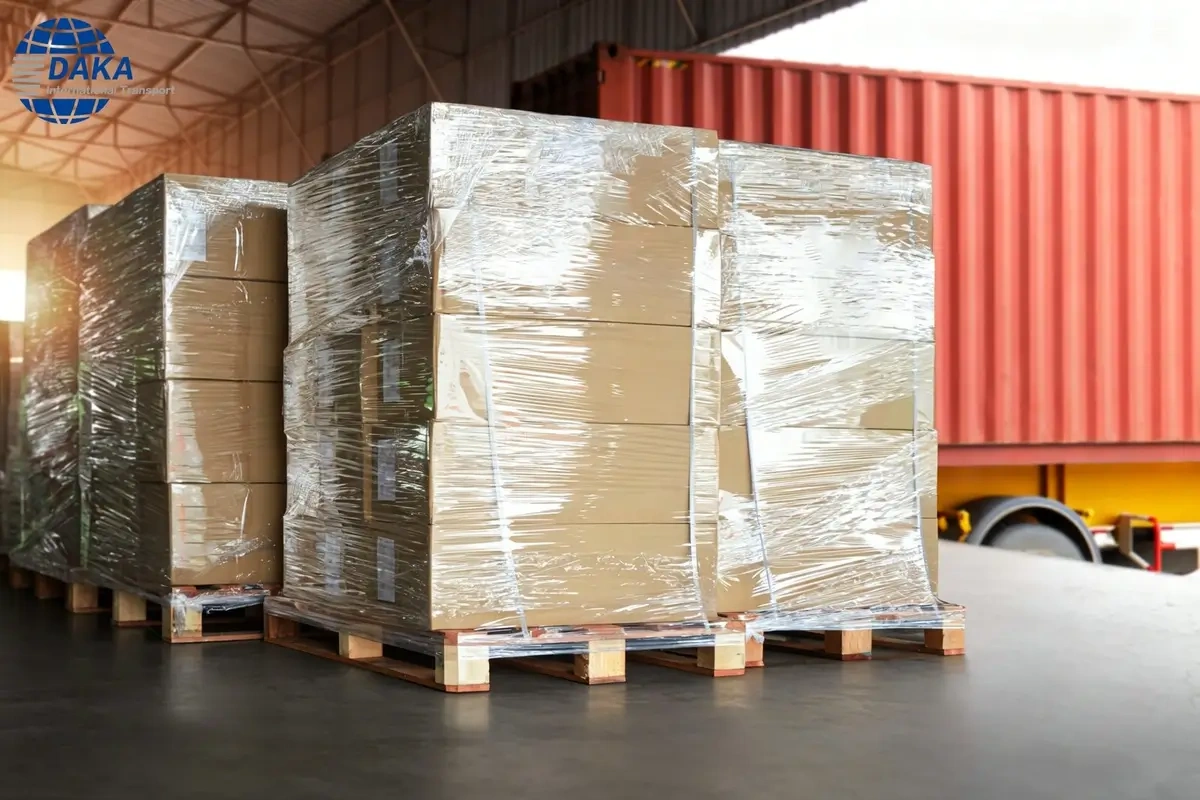
Shipping costs are not based on weight alone. The volume(size) will also affect shipping cost.
Fox example you have two boxes to be shipped from China to Australia, each box with same weight of 10kgs. One box size is 20cm*20cm*20cm and another box is 100cm*100cm*100cm. The bigger size box will cost more on shipping cost.
2. What is Actual Weight?
Actual weight refers to the physical weight of the cargo, including packaging.
If your shipment weighs 50 kg including packaging, then:
- Actual Weight = 50 kg
This is the most straightforward method used when goods are dense, which is common in heavy cargo.
3. What is Volumetric Weight?
Volumetric weight (also called dimensional weight) reflects how much space your cargo occupies.
Shipping companies use this to ensure large, lightweight shipments are priced fairly.
4. How to calculate chargeable weight/volume?
There are four shipping ways in international shipping as below :
- By airline
- By express
- By LCL
- By FCL
Different shipping ways means difference in calculating chargeable weight/volume.
A. By Airline
When we ship by airline, we charge on volumetric weight and actual weight whichever is greater
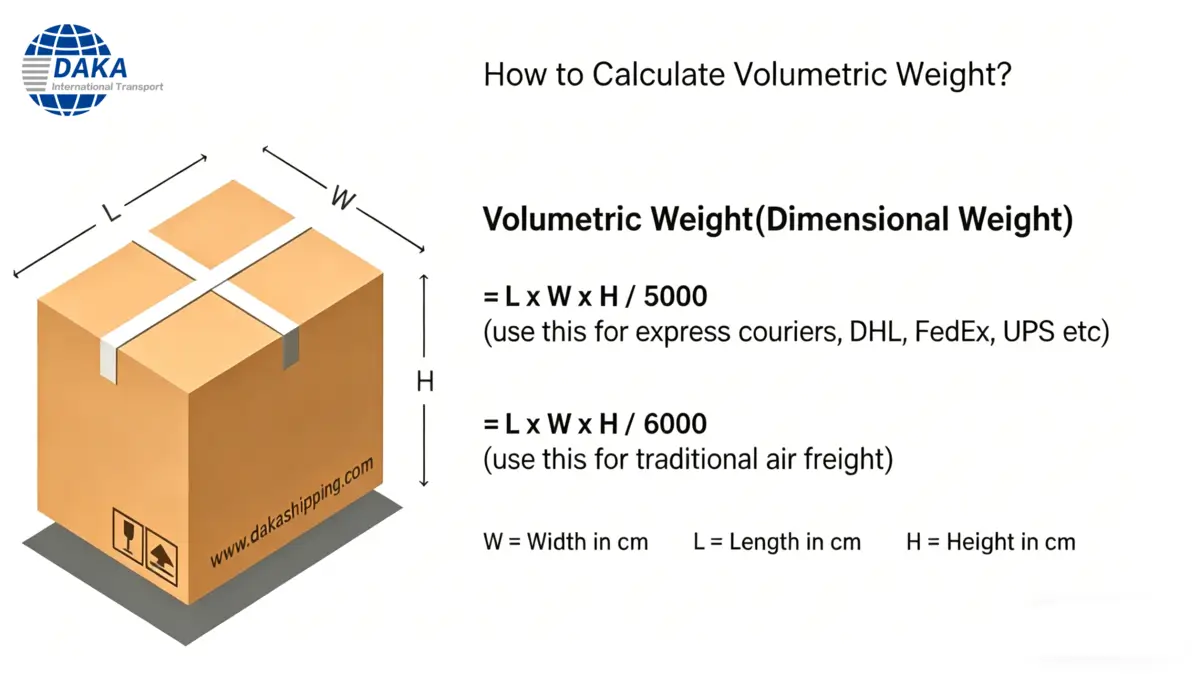
Volumetric Weight (kg) = Length (cm) × Width (cm) × Height (cm) ÷ 6000
For example if you have one box to be shipped from China to Australia. The size is 60cm*50cm*40cm and the actual weight is 15kgs
The volumetric weight is 60*50*40*6000=20kgs
The volumetric weight (20kgs) > the actual weight (15kgs)
The chargeable weight by airline is 20kgs
B. By Express (DHL, FedEx, UPS)
When we ship by express, we charge on volumetric weight and actual weight whichever is greater
Volumetric Weight (kg) = Length (cm) × Width (cm) × Height (cm) ÷ 5000
For example if one box size is 60cm*50cm*40cm, the actual weight is 15kgs
The volumetric weight is 60*50*40*5000=24kgs
The volumetric weight (24kgs) > the actual weight (15kgs)
The chargeable weight by express is 24kgs
C. Sea Freight (LCL)
LCL shipping means Less than Container Load shipping. We ship your products via sharing a container with others
When we ship by LCL, we normally charge as Cubic Meter(CBM) and it means how many space your cargo take up in the container. But the chargeable CBM is according to ‘actual volume’ and ‘weight volume’ whichever is greater.
‘Actual volume’ (CBM)= Length (m) × Width (m) × Height (m)
‘Weight volume’ (CBM)= Weight(kgs)/1000
We convert the weight into cubic meters according to 1000kgs=1CBM and then compare it with actual volume
For example, when we ship one pallet of clothes from China to Australia, the pallet size is 1m*1m*1.2m and the weight is 200kgs, The ‘actual volume’ is 1.2CBM and the weight volume is 200/1000=0.2CBM. As actual volume is bigger so we charge according to the actual volume which is 1.2 cubic meters.
However when we ship one pallet of tiles from China to Australia, the pallet size is 1m*1m*1.2m and the weight is 2000kgs. The actual volume is 1.2 cubic meters and the ‘weight volume’ is 2000/1000=2 cubic meters (according to 1CBM=1000kgs). As ‘weight volume’ is larger, we charge as ‘weight volume ’ which is 2CBM.
That is the shipping cost difference between one pallet of clothes and one pallet of tiles in LCL shipping.
D. Sea Freight (FCL)
FCL shipping mean Full Container Load shipping.
When we ship in a whole 20ft/40ft container, we always charge as one 20ft or 40ft container, no matter what is the weight and volume of the cargo inside.
Option A: You load 10 cubic meters,5000kgs into a 20ft and we ship the 20ft from China to Australia by FCL, we charge as one 20ft
Option B: You load 20 cubic meters and 10000kgs into a 20ft and we ship the 20ft from China to Australia by FCL, we still charge as one 20ft.
Shipping cost for Option A is same as Option B.
| Shipping Method | How to calculate? |
|---|---|
| Air Freight | Chargeable weight |
| Express Courier | Chargeable weight |
| Sea Freight (LCL) | Chargeable CBM |
| Sea Freight (FCL) | per container |
5. Common Mistakes to Avoid
1. Ignoring Packaging Size
Always include cartons, pallets, and outer packaging in your measurements.
2. Using Incorrect Units
Mixing centimeters and meters can lead to huge calculation errors.
3. Forgetting Carrier Rules
Different shipping ways use different divisors. Air Freight/Express Courier/Sea Freight (LCL)/Sea Freight (FCL) are different when calculating chargeable weight/CBM.
4. Not Comparing Both Weights
Always calculate both weight and volume before estimating costs.
6. Pro Tips to Reduce Shipping Costs
- Optimize packaging to reduce empty space
- Use vacuum packing for soft goods
- Stack efficiently to minimize volume
- Choose the right shipping method based on cargo type
Final Thoughts
Understanding how to calculate volume and weight is crucial for accurate shipping cost estimation and logistics planning. By mastering both actual weight and volumetric weight calculations, you can avoid surprises, optimize packaging, and make smarter shipping decisions.
Whether you’re a business owner or an individual shipper, these simple formulas will help you stay in control of your shipping expenses. You can also contact a professional freight forwarder such as DAKA Transport help calculate volume, weight, and chargeable weight accurately, ensuring a smoother and more cost-effective shipping process.